Is bottling beer really so bad?
In the world of home brewing, it seems that bottling beer has a place of honor as the least favourite part of the process – it is tedious, very labour intensive, extremely uncreative and is so easy to get wrong and ruin a few beers. So to make it simple and avoid the inevitable ruined bottles, I thought I’d explain, in full (with lots of pictures!), my beer bottling process.
I’ll take you through the steps and expand a little if I think it is unclear. So, to bottling beer:
1. Clean the work environment – all the dishes clean and away, surfaces washed.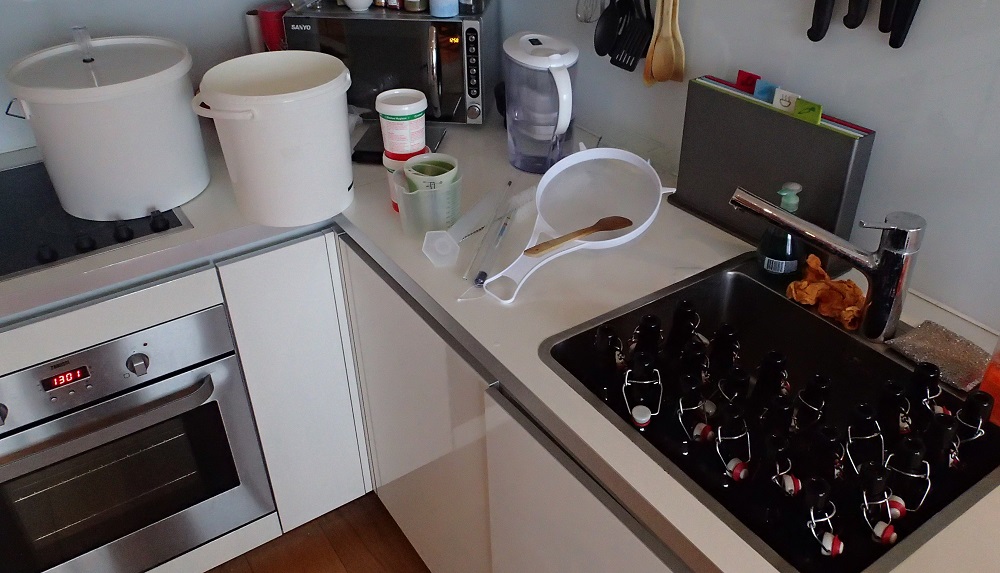
2. Get the bottles out – I always get a few extra, just in case.
3. Get all the tools out:
- 1 litre measuring jug
- Big plastic sieve
- “Clean” container (a fermentation bucket that isn’t in use)
- Bottle brush
- Sterilizing powder (I use VWP)
- Thermometer
- Hydrometer + measuring tube
- Wooden spoon
- Small funnel
- Dextrose
- Digital scale
4. Make 2 litres of sterilizing solution (1 tea spoon of VWP per litre)
5. Put the sterilizing solution and all the tools in the bucket
6. Sterilize thoroughly and rinse all the tools (keep the solution in the bucket!)

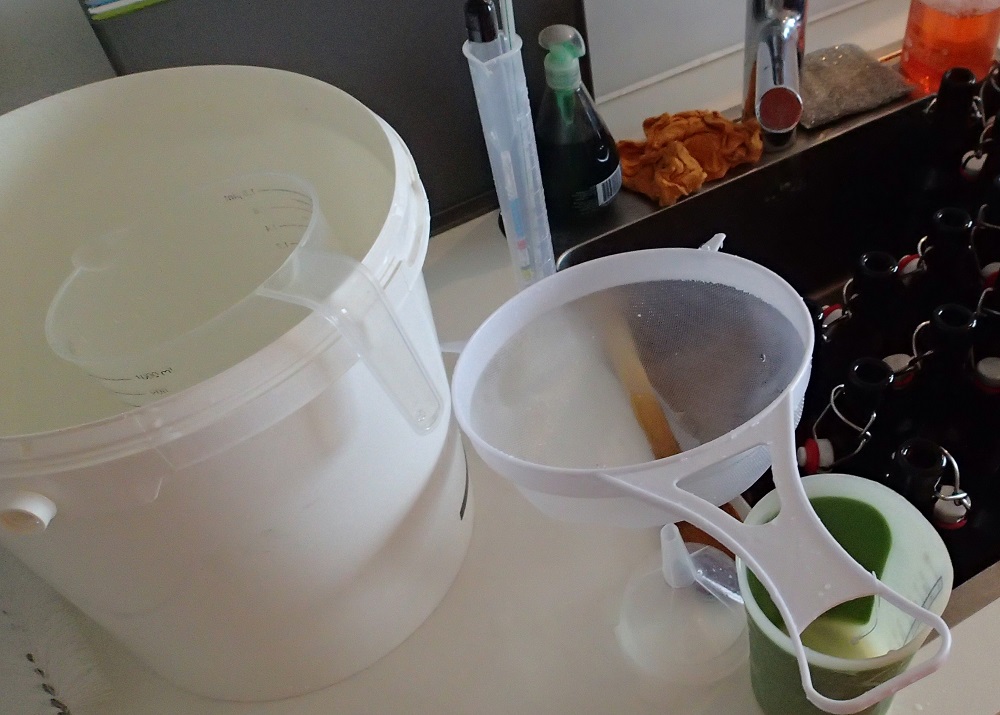


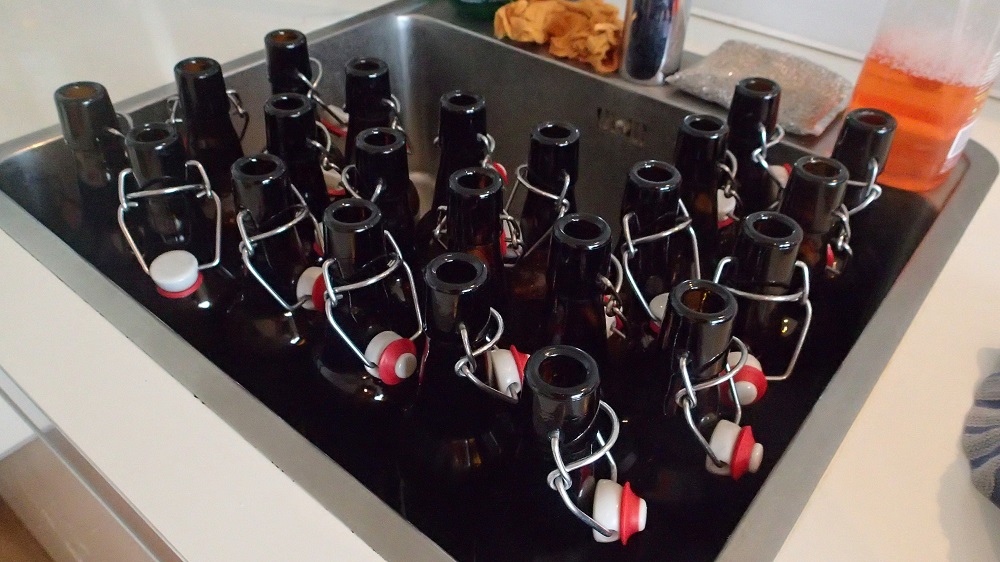
7. Organize all the bottles in the sink
8. Use the jug and funnel to pour a small amount (about 50ml) of solution into each bottle

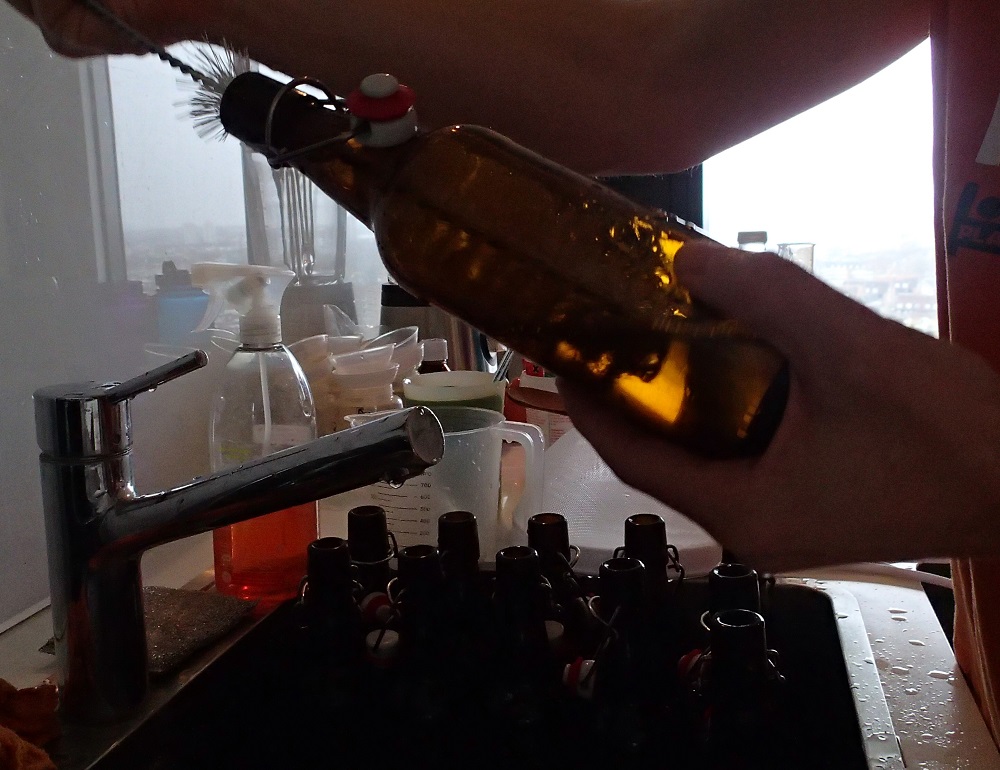
9. Stir the solution in each bottle, run the bottle brush through, pour out and rinse the bottle – repeat for all
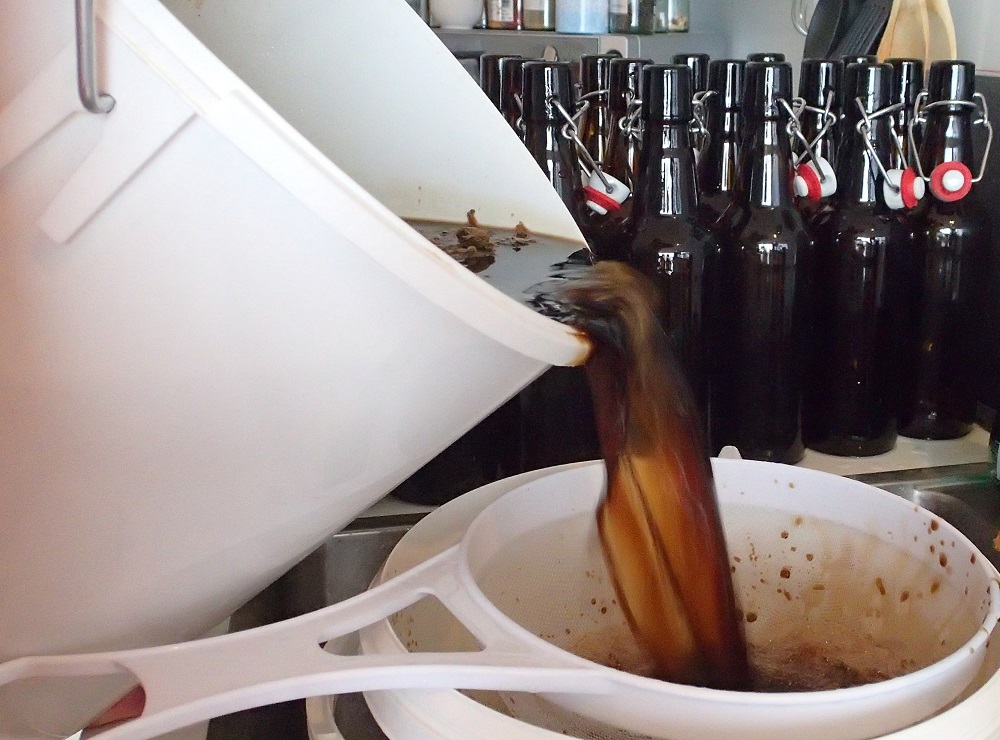
10. Pour the settled beer (don’t stir it!) into the clean bucket via the sieve


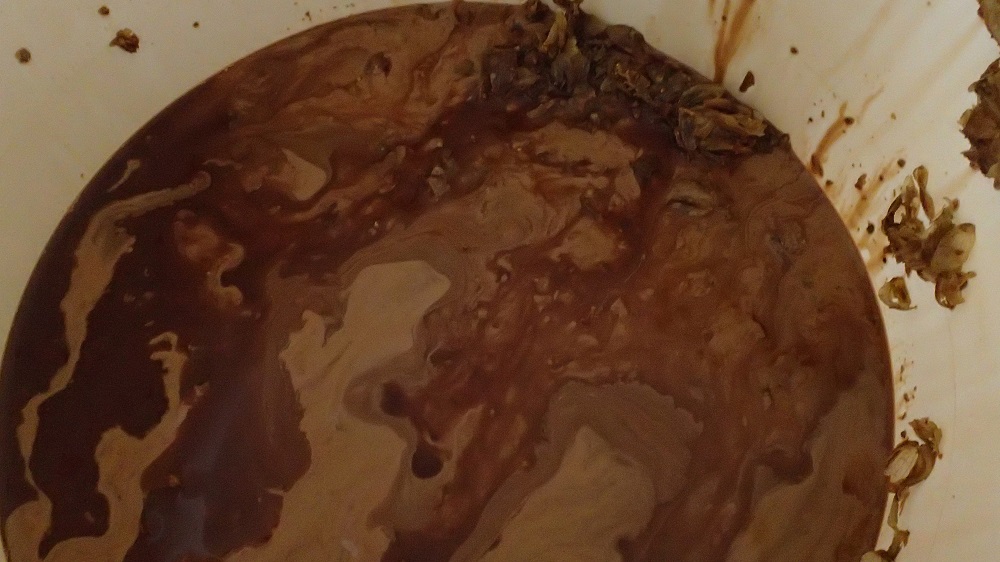
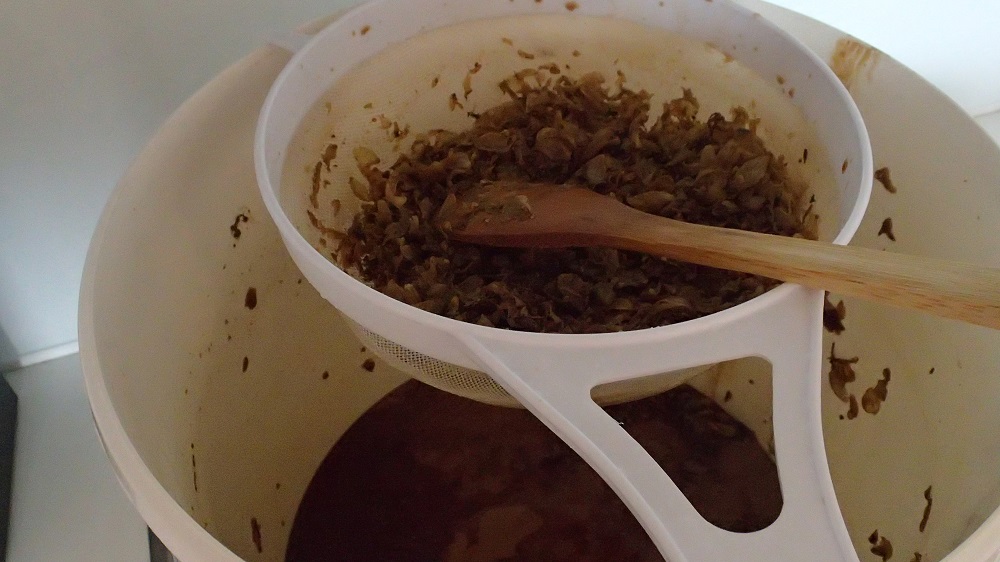
11. Give the hops a good squeeze to get all the beer out (if you dry hopped)

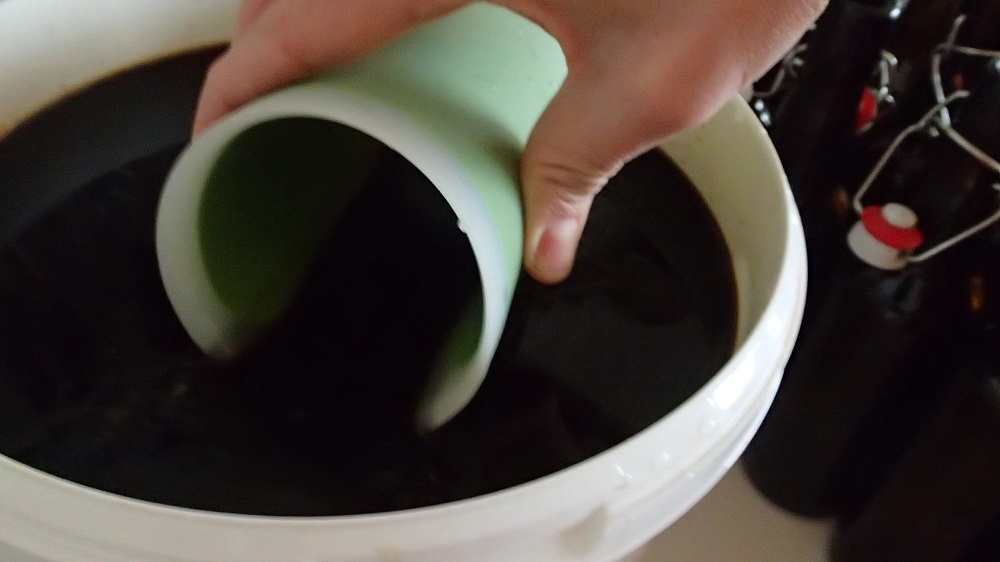
12. Measure your FG (Final Gravity) using the hydrometer and check the temperature, adjust gravity to temperature


13. Calculate ABV (OG-FG/7.46); it will go up a little more in the bottle
14. Add dextrose to the final beer. A note: This part is called priming and it what creates the carbonation in the beer. This part should be carefully calculated – not enough and the beer will be flat, too much and the bottle can explode. Use this great calculator to decide how much dextrose (or other sugars) to add


15. Stir the beer with the dextrose very well
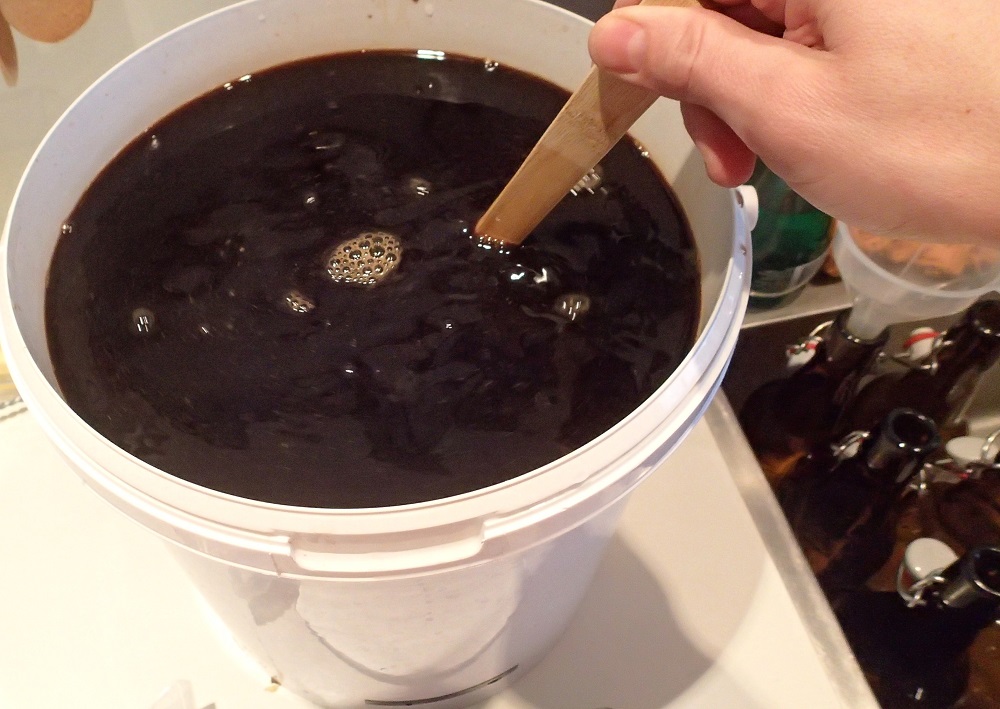
16. Using the jug and funnel fill up the bottles

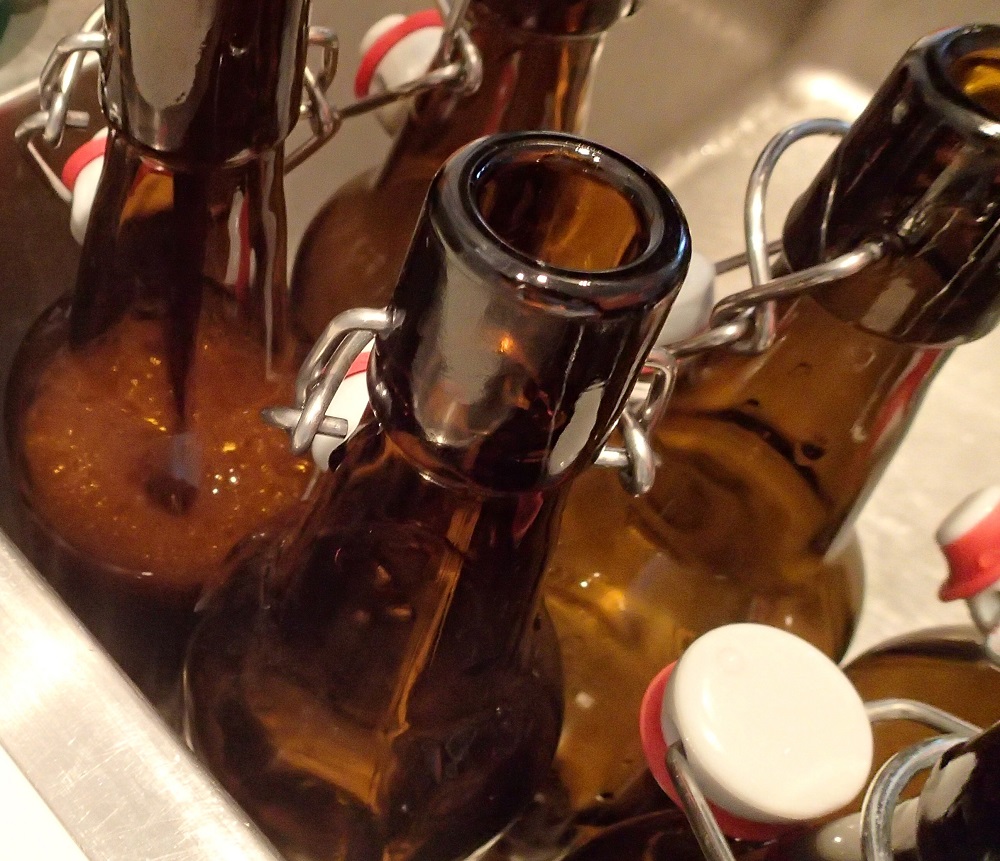
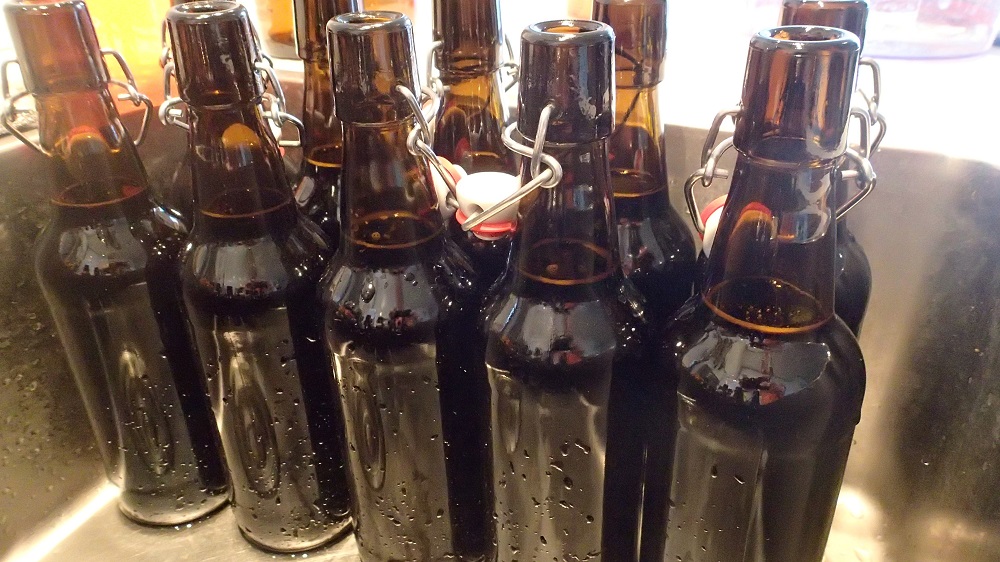

17. wipe the top of each bottle with a damp kitchen towel – this makes sure you get a good seal on the cap

18. Rinse the bottles on the outside and let air dry

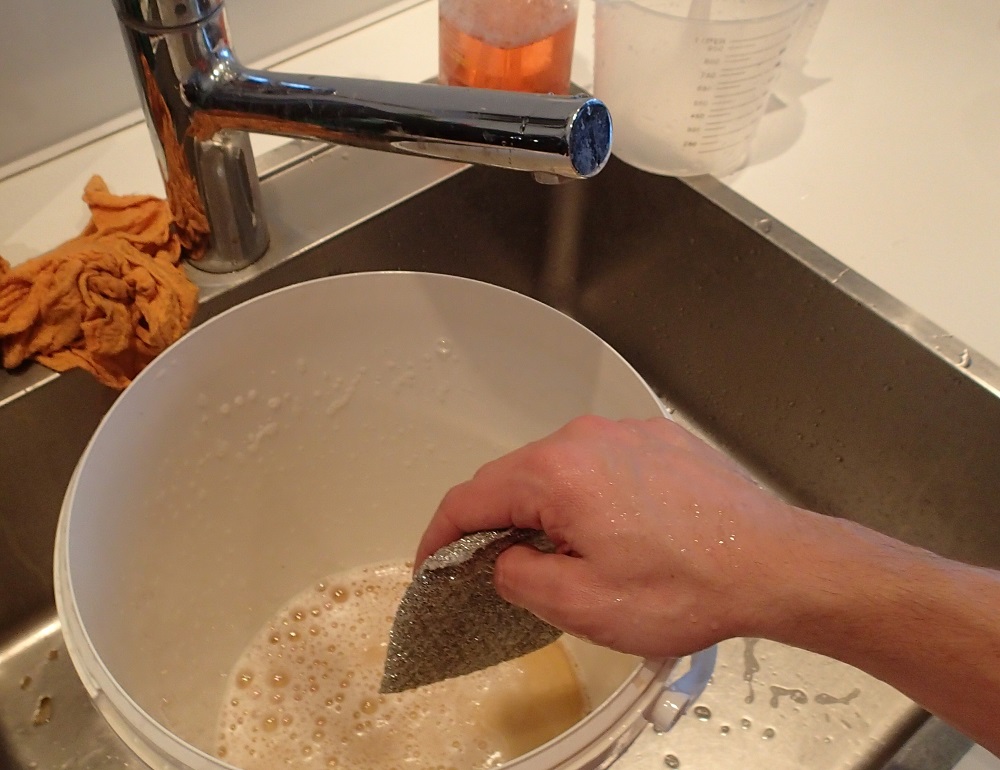
19. Start cleaning all the tools so you won’t be shouted at for making a mess in the kitchen
20. Label your beers – I write what style I think it is, date of make, special identifiers (if any) and ABV

21. Store the bottles in a dark place at room temperature for two weeks
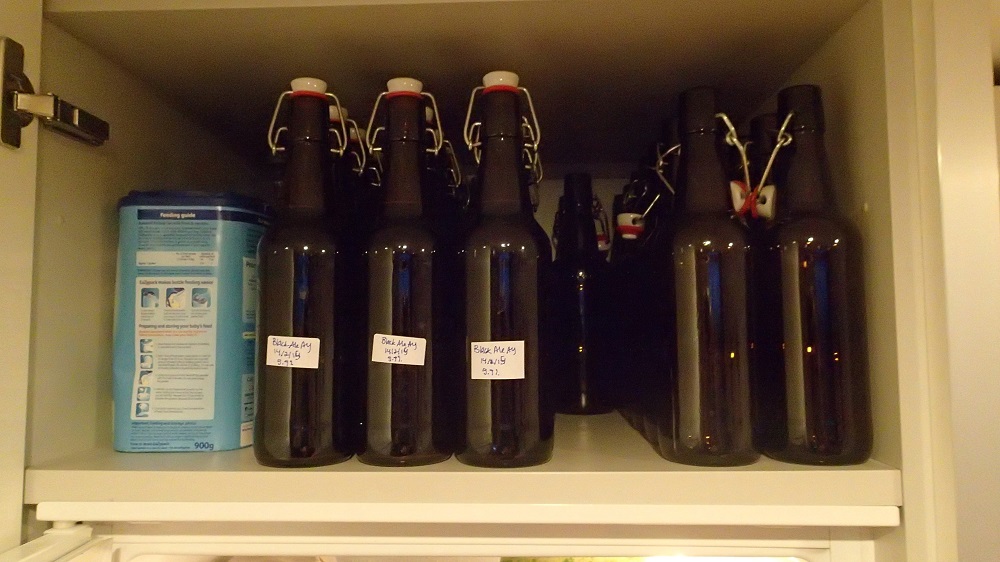
22. Put everything away
That is all, not a single step missed. In the beginning bottling beer takes a lot of time, but you get a system over time, and by now it takes me about 45 minutes to bottle 8-9 litres (from the first tool out to a clean kitchen again).
I know this method is not the most efficient (in time and beer loss), but it keeps everything on the kitchen top and away from my 1 year old daughter, to that is what I stick with. Do you have a better method I can use?
Bottling is almost fun if you add two tools to your kit: A bottling wand and a bottle tree with a rinser that mounts up top. Put the sterilizing solution in the top, give each bottle a couple of pumps with the rinser before putting them on a tree “branch” to drain while you do other brewing tasks. Sterilize your bottle caps in the top, too.
The wand fills bottles using vacuum pressure, and makes it easy to get the fill level right. Just fill to the top, and when you pull the wand out the fill level will be perfect.
I’m telling you all this like I’m an expert, when really bottling is the only part of the process where I’m more than an observer. In fact, getting a partner to help fill bottles while you cap and label makes it go three times as fast. Time to start sweet-talking the missus 😉
Those are most definitely on my wish list, but in a 80 square meter flat with a wife and a daughter I get very little space to store anything so each item must be very closely inspected for getting. I actually solved half the problem with adding a tap to one of my fermentation buckets and that helped dramatically with bottles filling, I’ll write about it soon and upload some images, very simple and very useful.
I am very tempted with the tree and rinser, so I might convince my wife that it won’t take too much space. By the way, I use flip tops, so that is very simple; and the missus is the labels master of the house…